Friday, July 23, 2010

A new liver, a new LIFE!

I do apologize for the interruption... My lack of posting and investigating will return to normal soon. Actually, I am anticipating my work will get even better now, since I no longer have to take care of Ricki. That is right!! I am a retired liver. teheheeee.

I (Ricki, that is) received my new and improved liver on July 13th, 2010. Because of this, I have already noticed:
  • Mental Clarity
  • No more DAILY nausea or vomiting
  • No more bloody noses (or anything else for that matter)
  • Energy!! Whoooo hoooo!
  • an appetite
  • a brighter (and yellow-less) complexion
And that is just the beginning!
I have so much to share, but don't worry, I now have TIME to share it with you!!  I still have a lot of hard work ahead -- taking care of someone's liver is a HUGE responsibility, but I am ready... The best things are worth it!

Spread the word! Live Life then Give Life!!
Share

Wednesday, July 7, 2010

Did you know...

...that the only two medical conditions that rule out organ donation are CJD and HIV? 

So sign up now at www.donatelife.net 
Be someones hero!

Spread the word! Live Life then Give Life!!
Share

Wednesday, June 23, 2010

Sclerosing Cholangitis

What is Sclerosing Cholangitis?

This is an inflammatory disease of the bile ducts, which eventually become scarred and narrowed ducts (tubes). It is thought to be autoimmune in origin, which means that the immune system produces antibodies which attack the bile ducts in the liver. This is supported by the fact that 50% of patients with sclerosing cholangitis have inflammatory disease of the bowel.
 
Sclerosing cholangitis can respond very well to a change in the diet and the principles of  the-liver-cleansing diet need to be followed for life. Patients with this problem have been able to return their liver function to normal, after adopting Dr Cabot's diet. However, they have found that the liver function becomes abnormal again if they do not maintain the liver diet principles.


It is important to take natural anti-inflammatory supplements to reduce the inflammation in the bile ducts. The most important ones are the antioxidant vitamins, vitamin C, E and natural beta-carotene. Selenium exerts a powerful anti-inflammatory effect and the dosage required is 200mcg daily. I recommend that you take a designer yeast powder high in selenium and its synergistic trace minerals, in a dose of 2 teaspoons daily. Raw vegetable juices, containing a mixture of carrot, celery, beetroot, broccoli and apple provide many benefits. Foods high in sulphur such as garlic, onions, legumes and eggs enhance sulfation of toxins, making them easier to excrete. Cruciferous vegetables such as broccoli, cabbage, cauliflower, kale, mustard greens, radish, bok choy and Brussels sprouts will help liver function and support detoxification pathways.

Foods to be avoided are:

  • All cow's milk products and gluten (found in wheat, rye, oats and barley).
  • Processed foods, alcohol, caffeine, tobacco, chocolate and refined sugar and flour.

General recommendations

  • If you want to improve liver function you must avoid all dairy products (milk, butter, cheese, cream, ice cream etc)
  • Avoid ALL margarines and similar type spreads
  • Avoid deep fried and fatty foods.
  • Avoid preserved meats, fried foods and fatty meats.
  • Limit chicken and turkey that is not free range, as this contains growth hormone (in the USA) and antibiotics that increase the liver's workload.
  • Avoid ALL alcohol.
  • Drink 2 liters of water each day.
  • Avoid artificial sweeteners - see www.dorway.com
Pay careful attention to any drugs or medications because they may aggravate your liver inflammation. Check with your doctor before taking them.

Recommended books

  • "The Healthy Liver and Bowel Book"
    This book is essential reading for anyone suffering from this disease or any other conditions of the liver or bowels.  Primary Sclerosing Cholangitis is covered on pg 87. 
  •  "Raw Juices Can Save Your Life" lists an A-Z medical conditions with useful raw juicing recipes.
  • "The Ultimate Detox" - All of the recipes in this book are free of gluten and dairy products.  As sclerosing cholangitis is an autoimmune condition, patients must adhere to a gluten and dairy free diet in order to help their immune system.
 
 A new friend of mine has been diagnosed with PSC... Hopefully this will give some help. We are worth fighting for, and besides your attitude, diet is KEY!! I LOVE Dr. Cabot's book, but it takes some working at for sure.

Spread the word! Live Life then Give Life!!
Share

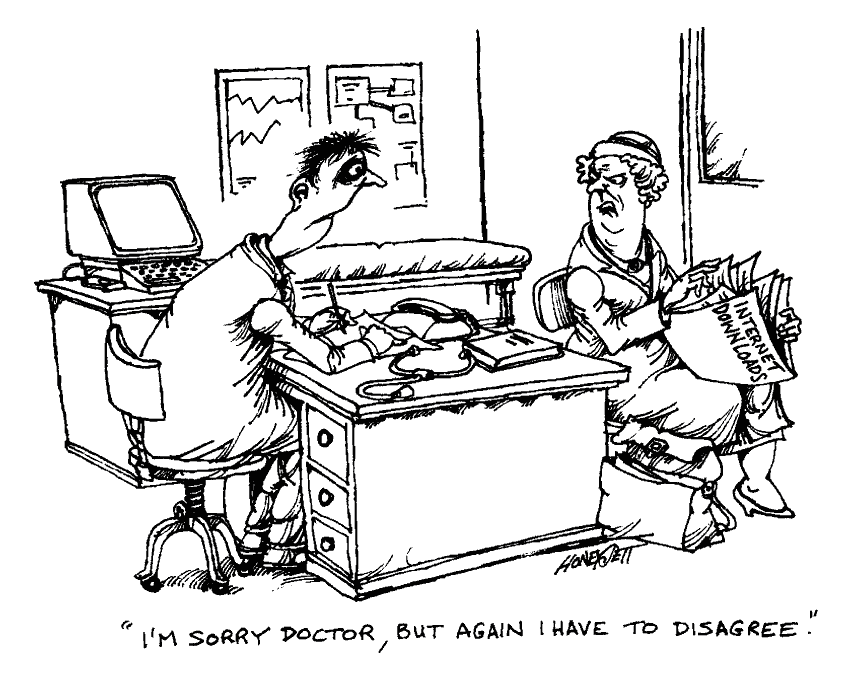
Pediatricians Commonly Misdiagnose Kids

 This is why we must be our own health advocates!
Get a CBC every year & keep a book - a journal of 
the results... Do it for your kids AND you!
June 23, 2010 -- Just over half of pediatricians responding to an anonymous survey acknowledged making at least one diagnostic error a month, and just under half said that at least once a year they made errors that harmed patients.

The survey involved 726 academic and community-based pediatricians or pediatric residents practicing in Houston or Cincinnati.Diagnosing viral illness as bacterial infection was the most commonly reported diagnostic error, closely followed by failure to recognize the side effects of medication.
In all, 55% of the pediatric residents, 48% of the pediatricians working at academic centers, and 53% of community-based pediatricians reported that they had misdiagnosed viral illness as bacterial infection.
Antibiotics are useless for the treatment of colds, flu, or other viral infections, yet they are widely prescribed. The CDC and other health groups identify antibiotic overuse as one of the most significant public health problems.
“Prescribing antibiotics when they are not needed increases the risk for antibiotic resistance and it puts patients at risk for side effects,” Baylor College of Medicine pediatrician and study co-author Geeta Singhal, MD, tells WebMD.

Study First to Explore Misdiagnosis in Kids

Published in the July issue of the journal Pediatrics, the study is among the first to explore the frequency, types, and causes of diagnostic errors in pediatric practice.
Slightly more than half of the academic center pediatricians and pediatric residents who responded to the survey reported misdiagnosing side effects of medicines taken by their young patients.
Singhal says adverse reactions to certain cough syrups and antihistamines are commonly misdiagnosed.
For example, first-generation antihistamines like the drugs Dimetapp and Benadryl typically make children sleepy, but they might have the opposite effect in children under age 2. Antihistamine-related hyper behavior in a very young child is often misdiagnosed, Singhal says.
Other key findings from the survey included:
  • When asked to identify the reasons for diagnostic process errors, about half of the doctors (48%) cited a lack of information of the patient’s medical history or failure to review medical charts. 
  • Just over 40% said failure by the parent or caregiver to seek medical attention in a timely manner contributed to the diagnostic error and 39% cited failure to follow up on abnormal diagnostic lab tests. 
  • The pediatricians and pediatric residents cited better access to electronic health records and closer follow-up of patients after initial treatment as strategies most likely to reduce diagnostic errors in pediatric practice.

Electronic Records: ‘No Silver Bullet’

Study co-investigator Hardeep Singh, MD, MPH, says electronic medical records will help address the lack of coordination among medical providers, which is a major contributor to misdiagnosis in both general and pediatric medicine.
Johns Hopkins University Medical School neurologist David Newman-Toker, MD, PhD, who has studied diagnostic errors, agrees. But he tells WebMD that much more is needed.

“It is clear to me after studying this issue that there is not going to be a single silver bullet that does away with diagnostic errors,” he says. “We will need multifaceted interventions to tackle the problem.”
Newman-Toker says it is no big surprise that the diagnostic errors are common in pediatric medicine, just as they are in general medicine. 
In a commentary published in the Journal of the American Medical Association last year, Newman-Toker and Johns Hopkins colleague Peter J. Pronovost, MD, PhD, write that diagnostic errors result in as many as 40,000 to 80,000 hospital deaths each year in the United States.
“I would think the risk of a fatal misdiagnosis is lower in children, because children have far fewer life-threatening medical conditions,” he says.
He adds that parents or caregivers who think their child’s illness has been misdiagnosed should never hesitate to discuss their concerns with the child’s physician.
Singh and Singhal agree.
“Families and caregivers know their children best,” Singhal says. “If they don’t understand the diagnosis or have concerns, it is important to talk to the pediatrician.”

Spread the word! Live Life then Give Life!!
Share